How to Build a Sales Funnel for Beginners
How to Build a Sales Funnel for Beginners
When I first encountered the concept of a sales funnel, I felt overwhelmed.
I had traffic, a website, and even a product. But nothing was working. Visitors would land on my page, look around, and leave.
That’s when a mentor told me something simple: “People don’t just buy because you showed up. They buy because you guide them.”
That lesson became my introduction to understanding how to build a sales funnel for beginners.
It’s not about cluttering your site with information; it’s about creating a clear path that takes people from curiosity to action.
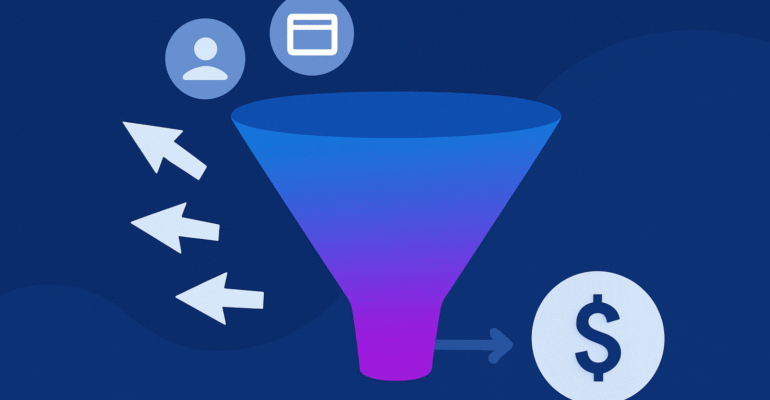
If you’re a tech-minded person, think of a sales funnel like a flowchart.
You have inputs (visitors), a process (your funnel), and outputs (sales or sign-ups).
Once you see it that way, building your first funnel feels less intimidating.
Imagine standing in front of a crowded street market. Hundreds of people are walking past you every minute.
Some glance at your stand, others ignore it completely.
A handful might stop to ask about your product. Maybe one or two will make a purchase.
Now, imagine you had a system that filtered the crowd into layers:
- First, attracting those most likely to care
- Then, engaging them with a compelling story
- Guide them step by step toward making a purchase
- And finally, ensuring they return again and again.
That’s what a sales funnel does.
In today’s crowded market, businesses that thrive aren’t necessarily the ones with the best product.
They’re the ones with the clearest system to move people from stranger → interested prospect → loyal customer.
Whether you’re a coach, a SaaS founder, or an eCommerce store owner, mastering funnels is no longer optional.
It’s the difference between unpredictable sales and consistent growth.
In this guide, I’ll show you exactly how to map your first funnel and start guiding visitors toward action.
Let’s break it down.
What Exactly Is a Sales Funnel?
At its simplest, a sales funnel is the journey your customer takes from the moment they first hear about you to the moment they buy (and beyond).
Think of it like dating:
-
First, you meet (awareness).
-
Then you get to know each other (interests).
-
Later, you start building trust (consideration).
-
Eventually, you commit (purchase).
-
If the relationship goes well, you stay together (loyalty & advocacy).
A funnel maps this process so you can design experiences that guide people intentionally, rather than leaving it all to chance.
The Classic Funnel Stages
-
Awareness: They discover you.
-
Interest: They start paying attention.
-
Consideration: They weigh your offer.
-
Purchase: They decide to buy.
-
Retention & Advocacy: They keep buying and refer others.
While the framework is universal, how you execute it depends on your business model.
Let’s see how it works in real life.
Case Study 1: The Coach Who Went from Crickets to Clients
Meet Sarah, a career coach. When she first launched her services, she had passion and expertise but no consistent way to attract clients.
Her “funnel” was basically posting inspirational quotes on Instagram and waiting for people to DM her. Unsurprisingly, she struggled.
Here’s how she turned things around:
a. Awareness
Sarah started posting short, relatable videos on LinkedIn and TikTok about common career struggles (“Why you’re not getting callbacks after interviews,” etc.).
She also wrote guest posts on career blogs.
b. Interest
Instead of asking people to book a call immediately, she offered a free PDF guide: “The 7 Mistakes Costing You Job Offers.”
Visitors had to give their email to download it.
c. Consideration
Once inside her funnel, subscribers received a 3-part email sequence:
- Email 1: Her personal story (laid off once, struggled, rebuilt).
- Email 2: Case studies of clients who landed jobs.
- Email 3: Invitation to a free webinar: “How to Land Your Dream Job in 90 Days.”
d. Purchase
On the webinar, Sarah taught real strategies, built trust, and pitched her $997 coaching program at the end.
e. Retention & Advocacy
She created a private alumni LinkedIn group where past clients shared wins and referred friends.
Result: Within 4 months, Sarah went from zero clients to consistently enrolling 5–7 new clients per month, enough to quit her part-time job.
Her funnel worked because it took strangers on a clear journey instead of hoping they’d “figure it out.”
Case Study 2: The SaaS Founder Who Doubled MRR
Alex built a SaaS tool for small agencies to automate client reporting.
His challenge? Tons of competitors.
Why should anyone pick his?
Here’s how he used a funnel:
a. Awareness
Alex wrote comparison blog posts: “[Competitor] vs [His Tool]: Which Is Right for Your Agency?”
Ran targeted LinkedIn ads to agency owners.
b. Interest
Instead of asking for a purchase right away, he offered a 14-day free trial.
c. Consideration
Once someone signed up, his funnel didn’t stop. They got a guided onboarding email series showing how to set up their first report.
He also had in-app checklists to push users toward the “aha moment.”
d. Purchase
At day 12 of the trial, users got a personalized email:
“Hey [Name], I noticed you’ve created 3 reports.
Our paid plan lets you add unlimited clients.
Want to upgrade today?”
e. Retention & Advocacy
Alex built a private Facebook community where users shared reporting templates.
He also created a referral program (1 free month for every new paying user referred).
Result: His funnel increased trial-to-paid conversion from 12% to 28%, effectively doubling his Monthly Recurring Revenue (MRR) in six months.
Case Study 3: The eCommerce Store That Boosted AOV
Finally, let’s look at Maria, who runs an e-commerce store selling eco-friendly skincare.
At first, her funnel was just: run ads → send to product page → hope for sales. She was burning money.
Here’s the shift:
a. Awareness
Maria ran Instagram Reels ads about the dangers of chemicals in skincare.
She partnered with eco-influencers to review her products.
b. Interest
Instead of sending people directly to her store, she offered a Skin Health Quiz: “Find out your skin type & get a personalized routine.”
To get results, people had to enter their email.
c. Consideration
Quiz results came with personalized product recommendations + a limited-time discount code.
She also sent an email series educating people about natural ingredients.
d. Purchase
To boost average order value (AOV), her checkout page offered bundle discounts (“Buy the cleanser + toner + moisturizer together and save 15%”).
e. Retention & Advocacy
Customers were invited to join a VIP Rewards Club for points, discounts, and early product drops.
Result: Her funnel improved her email capture rate by 42% and boosted AOV from $37 to $54. Within 8 months, her store hit 6 figures in revenue.
Why These Funnels Worked (And Yours Might Not)
Looking at Sarah, Alex, and Maria, a few patterns stand out:
-
They didn’t rush the sale: Each step built trust before asking for money.
-
They had clear entry points: Free guides, trials, and quizzes pulled people in.
-
They followed up relentlessly: Email, community, and onboarding. All ensured people didn’t “fall out” of the funnel.
-
They personalized the journey: A generic funnel is like a one-size-fits-all shirt. It rarely fits anyone well.
Why Beginners Need a Sales Funnel
Here’s the truth: most people don’t buy the first time they visit your site.
They need guidance. They need to know who you are, what you do, and why it matters to them.
A sales funnel for beginners does exactly that.
It helps you:
-
Capture attention.
-
Nurture interest.
-
Build trust.
-
Lead to a clear action (buy, sign up, or book a call).
The funnel is less about selling and more about leading.
The Building Blocks of Your Funnel
If you want to replicate their success, here’s what you need:
-
Traffic Source – ads, SEO, social media, partnerships.
-
Lead Magnet – something valuable & free: guide, quiz, trial.
-
Nurture Sequence – emails, retargeting ads, content.
-
Conversion Event (sales call, webinar, checkout page).
-
Post-Purchase Experience (onboarding, community, rewards).
Each block is essential. Skip one, and your funnel leaks.
Practical Funnel Blueprint (Step-by-Step)
Here’s a universal blueprint you can adapt:
1. Define Your Ideal Customer
- Who are they?
- What do they want?
- What pain keeps them awake at night?
2. Create a Compelling Lead Magnet
- Coaches → free guide, checklist, or webinar.
- SaaS → free trial, demo, or comparison post.
- eCommerce → quiz, discount, or sample.
3. Set Up Automated Nurture
- A 3–5 part email sequence works wonders. Tell your story, share case studies, build trust.
4. Design a High-Converting Offer
- Make it clear, urgent, and risk-free. (Guarantees, bonuses, or scarcity help.)
5. Don’t Forget Retention
- Your funnel doesn’t end at checkout. Keep customers engaged to maximize lifetime value.
8 Easy Steps to Map Your Next Sales Funnel
Step 1: Define the Goal of Your Funnel
Every funnel begins with one clear objective.
Ask yourself:
-
Do I want people to buy something right now?
-
Do I want them to sign up for a free resource?
-
Do I want them to book a consultation?
Without a goal, your funnel is a maze. With a goal, it’s a guided path.
Example: A friend launched a coding course but didn’t push for sales at first. His goal was to build an email list of learners. So his funnel’s main purpose was simple: get people to download a free mini-guide called “Learn Your First Programming Language.”
That was his first step in building a beginner-friendly sales funnel.
Step 2: Understand the Customer Journey
A funnel is not just a diagram; it’s a journey.
Visitors don’t start ready to buy; they move through stages:
-
Awareness – They discover you.
-
Interest – They realize you’re relevant.
-
Consideration – They evaluate if it’s worth it.
-
Decision – They act.
Think of your own behavior online:
You clicked an ad, read a case study, got an email, and then bought.
That’s the funnel at work.
If you’re learning how to build a sales funnel for beginners, map these stages first.
Step 3: Sketch a Simple Funnel Map
This is where things get practical. Start lean. Don’t design a skyscraper. Think bridge.
The simplest funnel looks like this:
-
Traffic Source → Landing Page → Action (Goal)
But let’s make it concrete.
Suppose you’re offering a free eBook:
-
Social Media Post → Landing Page with Sign-Up Form → Thank You Page → Email Sequence → Paid Offer
That’s your funnel map. You can literally sketch it on paper before building.
Step 4: Build Each Step with Intention
Each part of the funnel matters.
Let’s break it down.
a) Traffic Source
How will people find you?
Common beginner options include:
-
Social media posts
-
Search traffic (blogs, SEO)
-
Paid ads
-
Referrals
Choose one at first. Don’t spread yourself thin.
b) Landing Page
This is your welcome mat.
Keep it focused:
-
Headline with value (“Get the 5-Step Coding Roadmap”)
-
Short benefit-driven explanation
-
Simple form (name + email)
c) Thank You Page
Most beginners ignore this step, but it’s powerful.
Confirm the sign-up and give them the directions.
For example: “Thanks for signing up! Check your inbox for the guide. Meanwhile, here’s a quick video on how to start coding today.”
d) Nurture Sequence
People rarely buy instantly.
That’s why email matters.
Use it to:
-
Deliver the promised freebie.
-
Share tips and stories.
-
Introduce your main offer naturally.
That’s how you gently move people from interest to decision.
Step 5: Keep It Lean and Simple
When learning how to build a sales funnel for beginners, the biggest mistake is overcomplication.
Retargeting ads, 10-step emails, complex upsells – save that for later.
Start with:
-
One traffic source
-
One landing page
-
One thank you page
-
One offer
The leaner it is, the faster you’ll learn what works.
Step 6: Track, Measure, Adjust
The beauty of sales funnels is measurability.
You’ll know exactly where people drop off.
-
Lots of visits but few sign-ups? Fix the landing page.
-
Many sign-ups but low email opens? Fix subject lines.
-
Good engagement but no sales? Clarify the offer.
Small tweaks create big wins.
Step 7: Add Storytelling to Your Funnel
Tech people often forget this part.
Funnels aren’t just steps – they’re experiences.
Storytelling humanizes the process.
Instead of saying “Buy my course,” share your journey:
“When I tried to learn coding, I wasted six months on random YouTube videos. Nothing stuck. I almost gave up. Then I found a 5-step method that worked. That’s the method I’m teaching.”
Stories make funnels resonate. And beginners need that emotional connection.
Step 8: Launch Your First Funnel
At some point, you have to stop sketching and start.
-
Pick one goal.
-
Map the path.
-
Build the pages.
-
Write the emails.
-
Launch.
Your first funnel won’t be perfect. Mine wasn’t.
But the moment I saw my first subscriber, I knew I had something powerful.
Common Sales Funnel Mistakes to Avoid
-
Asking for the sale too soon.
-
Having no clear lead magnet.
-
Not following up (most sales happen after 5–7 touchpoints).
-
Overcomplicating things with too many steps.
-
Ignoring retention (the cheapest customer is the one you already have).
The magic of sales funnels isn’t in the software or fancy graphics. It’s in the strategy.
Sarah (the coach), Alex (the SaaS founder), and Maria (the eCommerce store owner) all succeeded because they stopped leaving customer journeys to chance.
They built systems that guided strangers step by step into becoming loyal buyers.
The same can happen to you.
If you don’t have a funnel yet, start simple: create one entry point, one nurture sequence, one offer.
Once it works, you can expand.
Because in today’s noisy marketplace, the businesses that survive aren’t the ones shouting the loudest. They’re the ones with the clearest path for their customers to follow.
Summary
A sales funnel isn’t about tricks. It’s about structure. It’s about guiding people, not pushing them. For anyone figuring out how to build a sales funnel for beginners, remember this:
Start small. Keep it simple. Improve as you go.
Your job is to guide visitors from clicks to customers, step by step.
Once you see that happen for the first time, you’ll understand why every successful business runs on sales funnels.
They may not call it a sales funnel, but the principle is still the same.